Kharum emerge de una zona de Monstrarium Vivens donde las cosas que intentaron desaparecer continúan ocupando espacio. Habita en la sombra, cerca de rincones cerrados, pasillos, habitaciones abandonadas y lugares donde el aire parece haber permanecido inmóvil demasiado tiempo. Su entorno nunca está completamente en silencio. Hay roces, golpes leves, algo que se arrastra fuera del campo de visión. La presencia de Kharum suele percibirse antes de encontrar su cuerpo. Camina muy despacio. Su movimiento tiene el cansancio de algo que lleva demasiado peso y ha dejado de intentar llegar pronto a ninguna parte. Una larga cola avanza detrás de él, pegada al suelo. En ella se adhieren restos de aquello que encuentra a su paso y, sobre todo, aquello que alguien quiso dejar atrás. Kharum arrastra. El sonido de esa fricción lo acompaña constantemente. Su presencia altera físicamente el espacio. El aire adquiere densidad, respirar exige más esfuerzo y permanecer cerca de él produce una sensación progresiva de agotamiento. Kharum hace ruido incluso cuando apenas se mueve. Nunca consigue integrarse por completo al fondo. Siempre queda algún indicio de que continúa ahí.
Kharum encarna el miedo a aquello de lo que no conseguimos deshacernos.
Recuerdos, culpas, vergüenzas, pérdidas, decisiones, palabras pronunciadas hace años, imágenes que regresan sin haber sido llamadas. Kharum pertenece a esa materia que creemos haber enterrado y conserva suficiente peso para reaparecer. Su miedo ocurre cuando descubrimos que olvidar también tiene límites y que ciertas cosas permanecen adheridas a nosotros mucho después de haber decidido abandonarlas. Por eso su cola resulta fundamental. Funciona como un archivo involuntario. Recoge lo escondido, lo empuja nuevamente hacia la superficie y deja un rastro que impide fingir que nunca estuvo allí. Cuanto más se intenta ocultar algo, más materia encuentra Kharum para arrastrar. Su lentitud vuelve el proceso todavía más incómodo. Nada desaparece rápidamente bajo su presencia. Kharum tampoco necesita perseguir. Acecha desde la sombra y permanece. Puede esperar durante largos periodos porque aquello que carga ya conoce el camino de regreso. Su territorio se forma alrededor de esa persistencia. Los espacios se vuelven pesados, los sonidos adquieren una proximidad irritante y el cuerpo comienza a sentir la fatiga de convivir con algo que ocupa lugar aunque quisiéramos expulsarlo.
Dentro de Monstrarium Vivens, Kharum ha encontrado forma sobre papel y posteriormente volumen en la cerámica. Su configuración conserva el cuerpo alargado, las extremidades pesadas, las grandes prolongaciones de la cabeza y esa cola que extiende su presencia mucho más allá del lugar exacto donde se encuentra. Kharum sigue avanzando despacio. Detrás de él permanece un rastro de cosas que alguna vez creímos haber dejado atrás.
ENGLISH:
Kharum emerges from a zone of Monstrarium Vivens where the things that tried to disappear continue to take up space. He dwells in the shadows, near closed corners, hallways, abandoned rooms and places where the air seems to have remained still for too long. His surroundings are never completely silent. There are scrapes, faint knocks, something dragging itself just outside the field of vision. Kharum's presence is usually perceived before his body is found.
He walks very slowly. His movement carries the weariness of something that bears too much weight and has stopped trying to get anywhere soon. A long tail advances behind him, pressed against the ground. Clinging to it are remnants of whatever he finds in his path and, above all, of what someone wanted to leave behind. Kharum drags. The sound of that friction accompanies him constantly.
His presence physically alters space. The air grows dense, breathing demands more effort, and remaining near him produces a gradual sense of exhaustion. Kharum makes noise even when he barely moves. He never manages to blend completely into the background. Some sign that he is still there always remains.
Kharum embodies the fear of what we cannot get rid of.
Memories, guilt, shame, losses, decisions, words spoken years ago, images that return without being summoned. Kharum belongs to that matter we believe we have buried and that still holds enough weight to resurface. His fear occurs when we discover that forgetting also has its limits, and that certain things remain stuck to us long after we decided to abandon them.
That is why his tail is essential. It functions as an involuntary archive. It gathers what was hidden, pushes it back to the surface and leaves a trail that makes it impossible to pretend it was never there. The harder one tries to hide something, the more matter Kharum finds to drag. His slowness makes the process even more uncomfortable. Nothing disappears quickly in his presence.
Nor does Kharum need to pursue. He lurks in the shadows and remains. He can wait for long periods because what he carries already knows the way back. His territory forms around that persistence. Spaces become heavy, sounds take on an irritating closeness, and the body begins to feel the fatigue of living alongside something that takes up space even though we would like to expel it.
Within Monstrarium Vivens, Kharum has found form on paper and later volume in ceramics. His configuration retains the elongated body, the heavy limbs, the large extensions of the head and that tail which extends his presence far beyond the exact place where he stands.
Kharum keeps moving forward slowly. Behind him remains a trail of things we once believed we had left behind.
Kharum emerge de una zona de Monstrarium Vivens donde las cosas que intentaron desaparecer continúan ocupando espacio. Habita en la sombra, cerca de rincones cerrados, pasillos, habitaciones abandonadas y lugares donde el aire parece haber permanecido inmóvil demasiado tiempo. Su entorno nunca está completamente en silencio. Hay roces, golpes leves, algo que se arrastra fuera del campo de visión. La presencia de Kharum suele percibirse antes de encontrar su cuerpo. Camina muy despacio. Su movimiento tiene el cansancio de algo que lleva demasiado peso y ha dejado de intentar llegar pronto a ninguna parte. Una larga cola avanza detrás de él, pegada al suelo. En ella se adhieren restos de aquello que encuentra a su paso y, sobre todo, aquello que alguien quiso dejar atrás. Kharum arrastra. El sonido de esa fricción lo acompaña constantemente. Su presencia altera físicamente el espacio. El aire adquiere densidad, respirar exige más esfuerzo y permanecer cerca de él produce una sensación progresiva de agotamiento. Kharum hace ruido incluso cuando apenas se mueve. Nunca consigue integrarse por completo al fondo. Siempre queda algún indicio de que continúa ahí.
Kharum encarna el miedo a aquello de lo que no conseguimos deshacernos.
Recuerdos, culpas, vergüenzas, pérdidas, decisiones, palabras pronunciadas hace años, imágenes que regresan sin haber sido llamadas. Kharum pertenece a esa materia que creemos haber enterrado y conserva suficiente peso para reaparecer. Su miedo ocurre cuando descubrimos que olvidar también tiene límites y que ciertas cosas permanecen adheridas a nosotros mucho después de haber decidido abandonarlas. Por eso su cola resulta fundamental. Funciona como un archivo involuntario. Recoge lo escondido, lo empuja nuevamente hacia la superficie y deja un rastro que impide fingir que nunca estuvo allí. Cuanto más se intenta ocultar algo, más materia encuentra Kharum para arrastrar. Su lentitud vuelve el proceso todavía más incómodo. Nada desaparece rápidamente bajo su presencia. Kharum tampoco necesita perseguir. Acecha desde la sombra y permanece. Puede esperar durante largos periodos porque aquello que carga ya conoce el camino de regreso. Su territorio se forma alrededor de esa persistencia. Los espacios se vuelven pesados, los sonidos adquieren una proximidad irritante y el cuerpo comienza a sentir la fatiga de convivir con algo que ocupa lugar aunque quisiéramos expulsarlo.
Dentro de Monstrarium Vivens, Kharum ha encontrado forma sobre papel y posteriormente volumen en la cerámica. Su configuración conserva el cuerpo alargado, las extremidades pesadas, las grandes prolongaciones de la cabeza y esa cola que extiende su presencia mucho más allá del lugar exacto donde se encuentra. Kharum sigue avanzando despacio. Detrás de él permanece un rastro de cosas que alguna vez creímos haber dejado atrás.
ENGLISH:
Kharum emerges from a zone of Monstrarium Vivens where the things that tried to disappear continue to take up space. He dwells in the shadows, near closed corners, hallways, abandoned rooms and places where the air seems to have remained still for too long. His surroundings are never completely silent. There are scrapes, faint knocks, something dragging itself just outside the field of vision. Kharum's presence is usually perceived before his body is found.
He walks very slowly. His movement carries the weariness of something that bears too much weight and has stopped trying to get anywhere soon. A long tail advances behind him, pressed against the ground. Clinging to it are remnants of whatever he finds in his path and, above all, of what someone wanted to leave behind. Kharum drags. The sound of that friction accompanies him constantly.
His presence physically alters space. The air grows dense, breathing demands more effort, and remaining near him produces a gradual sense of exhaustion. Kharum makes noise even when he barely moves. He never manages to blend completely into the background. Some sign that he is still there always remains.
Kharum embodies the fear of what we cannot get rid of.
Memories, guilt, shame, losses, decisions, words spoken years ago, images that return without being summoned. Kharum belongs to that matter we believe we have buried and that still holds enough weight to resurface. His fear occurs when we discover that forgetting also has its limits, and that certain things remain stuck to us long after we decided to abandon them.
That is why his tail is essential. It functions as an involuntary archive. It gathers what was hidden, pushes it back to the surface and leaves a trail that makes it impossible to pretend it was never there. The harder one tries to hide something, the more matter Kharum finds to drag. His slowness makes the process even more uncomfortable. Nothing disappears quickly in his presence.
Nor does Kharum need to pursue. He lurks in the shadows and remains. He can wait for long periods because what he carries already knows the way back. His territory forms around that persistence. Spaces become heavy, sounds take on an irritating closeness, and the body begins to feel the fatigue of living alongside something that takes up space even though we would like to expel it.
Within Monstrarium Vivens, Kharum has found form on paper and later volume in ceramics. His configuration retains the elongated body, the heavy limbs, the large extensions of the head and that tail which extends his presence far beyond the exact place where he stands.
Kharum keeps moving forward slowly. Behind him remains a trail of things we once believed we had left behind.

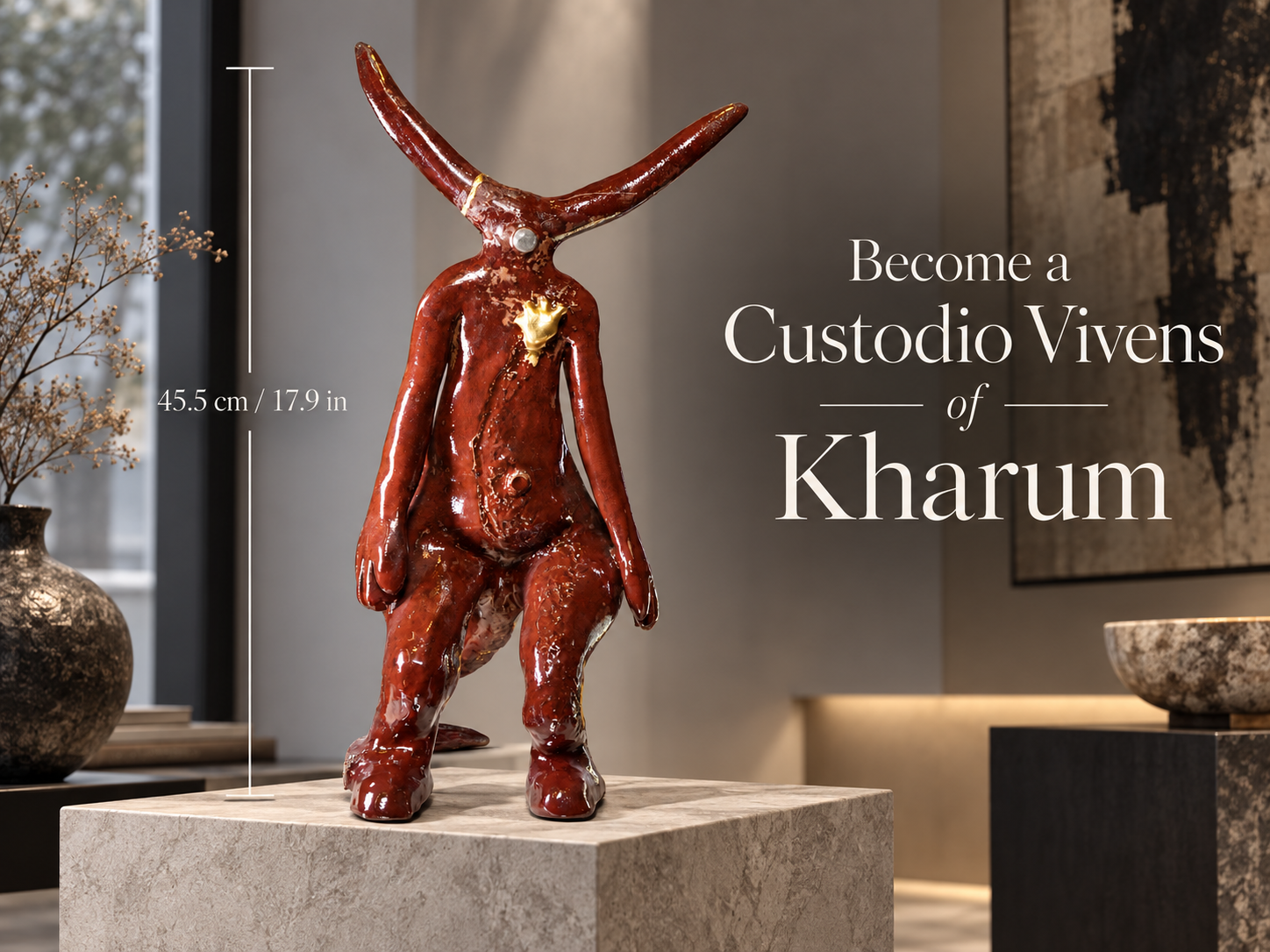 Image 1 of 7
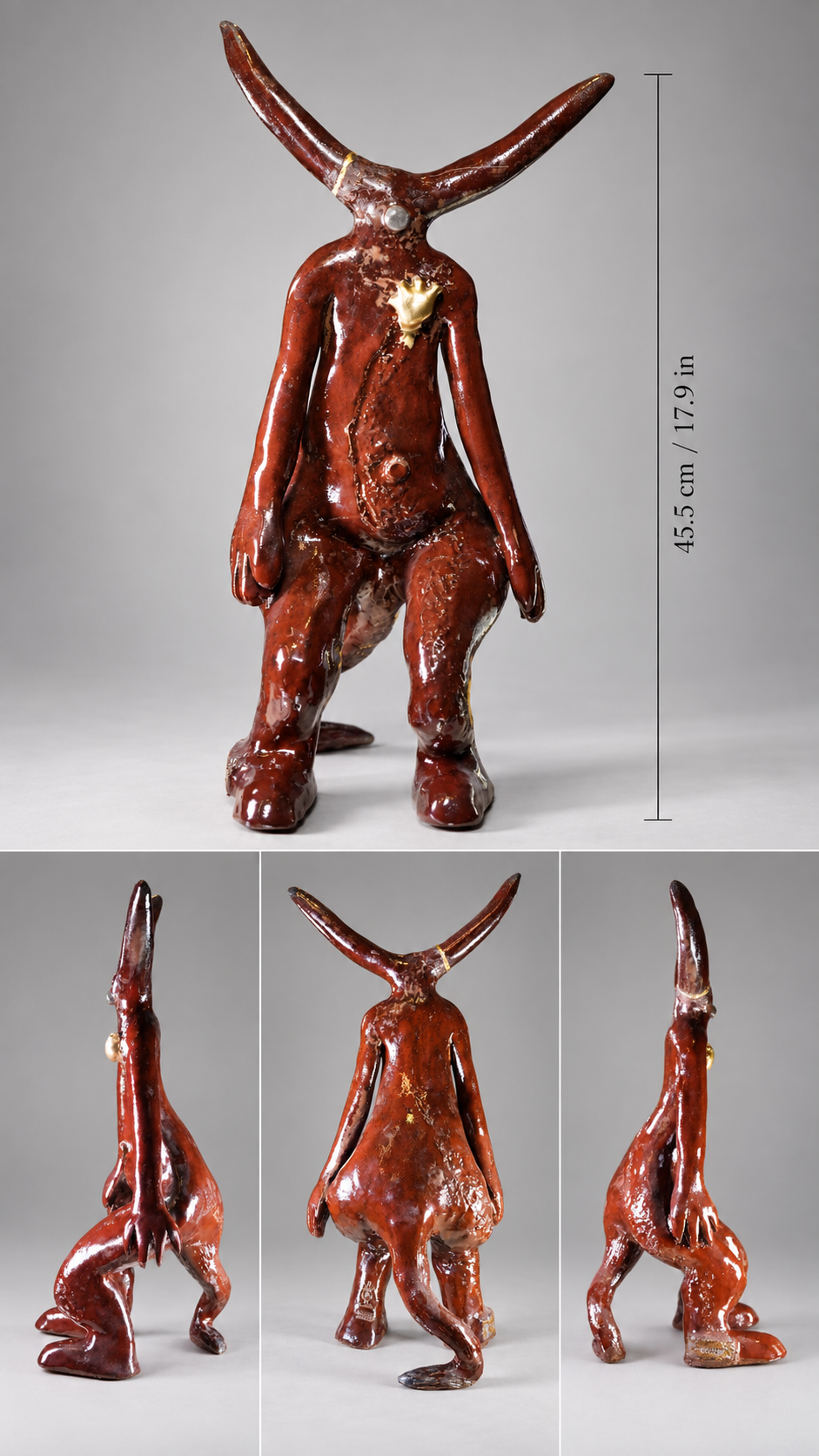 Image 2 of 7
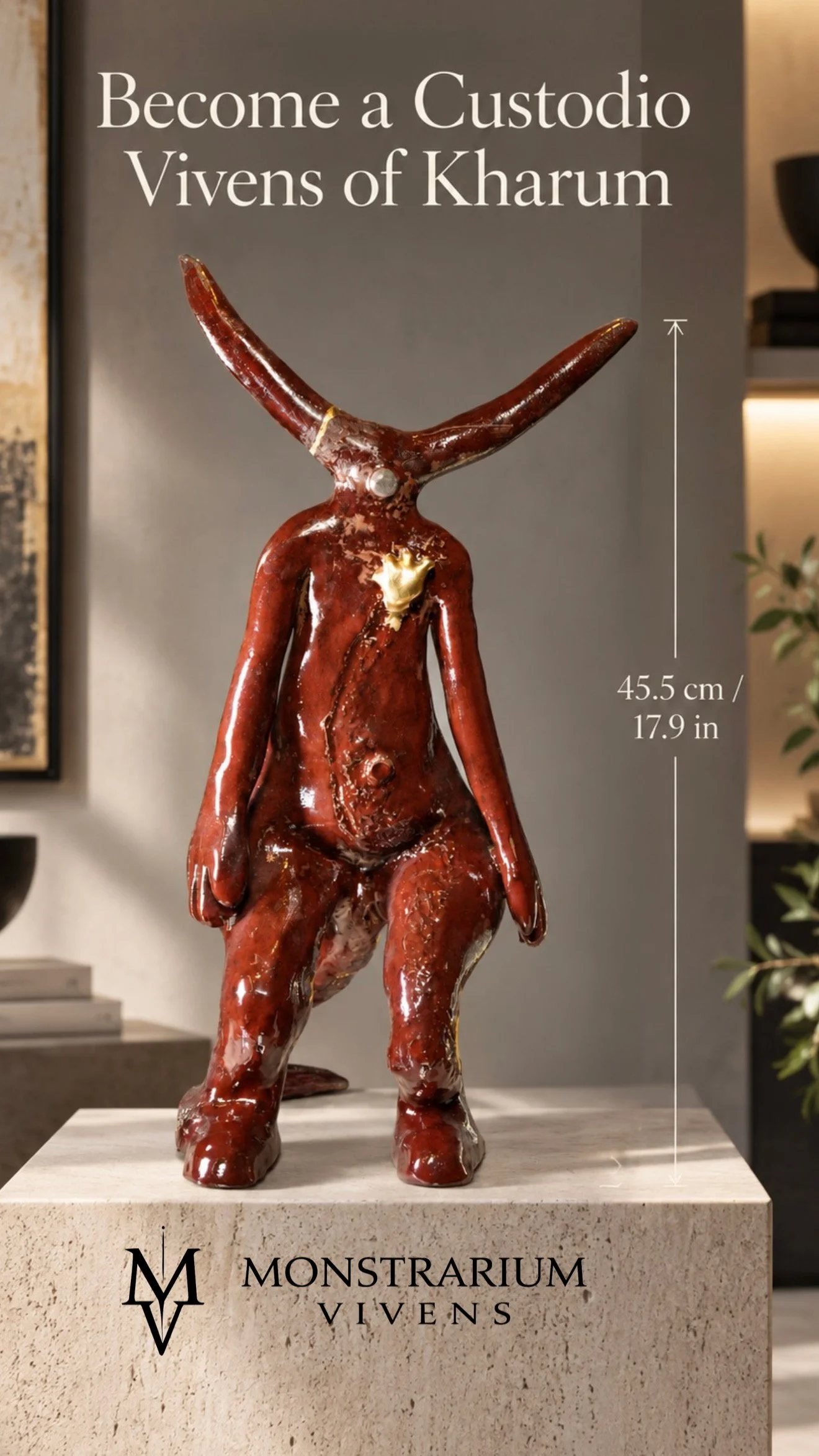 Image 3 of 7
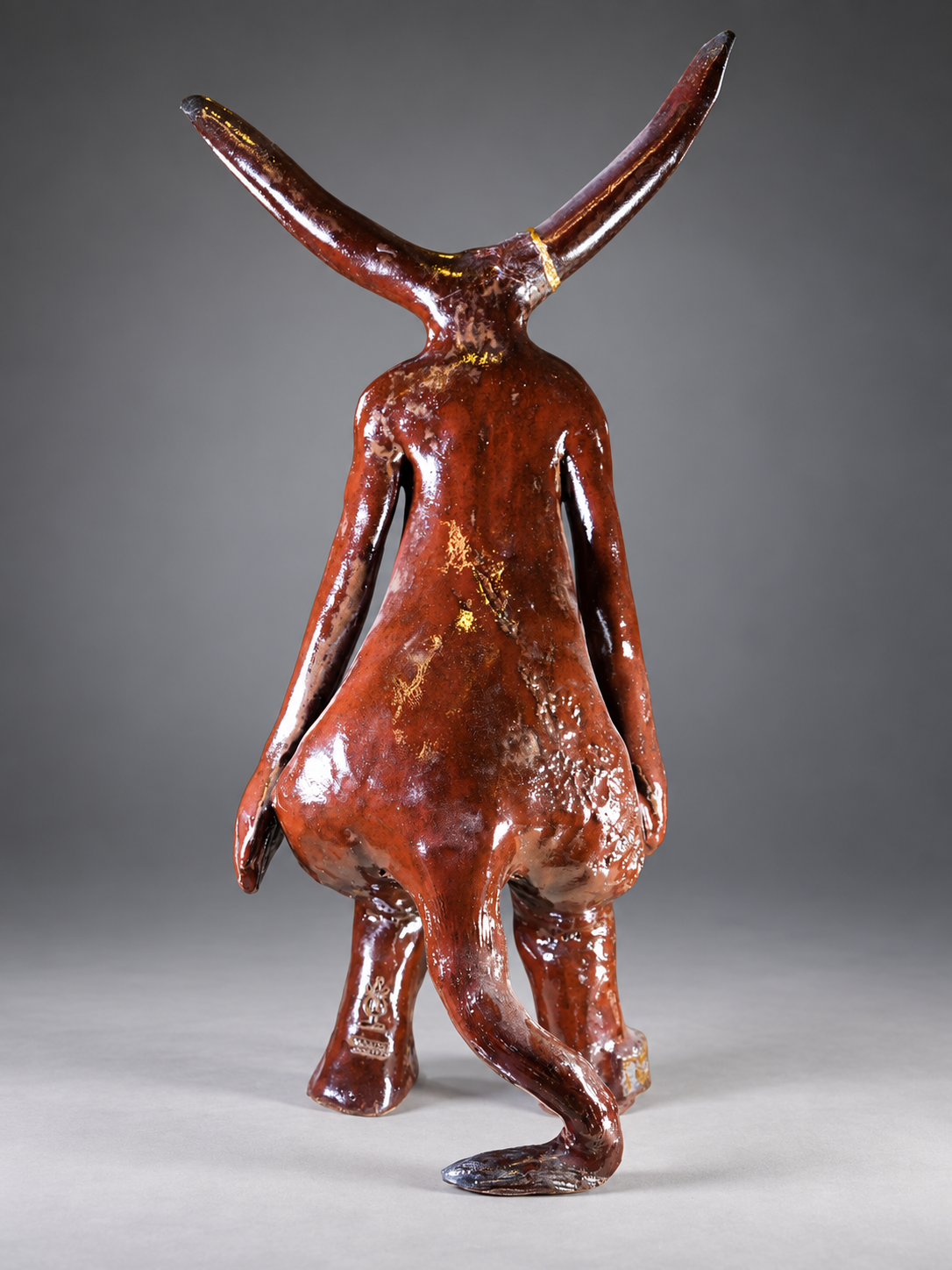 Image 4 of 7
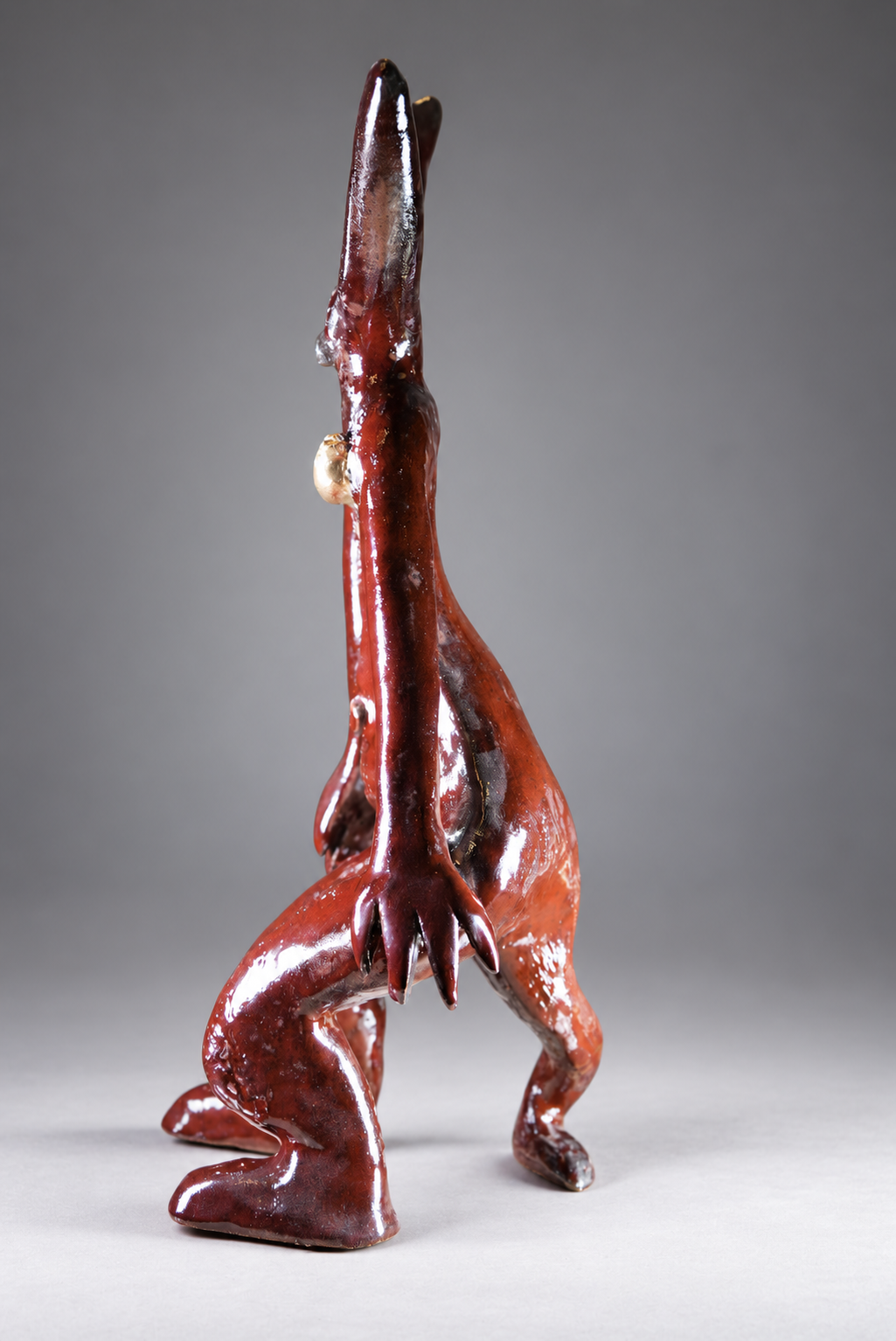 Image 5 of 7
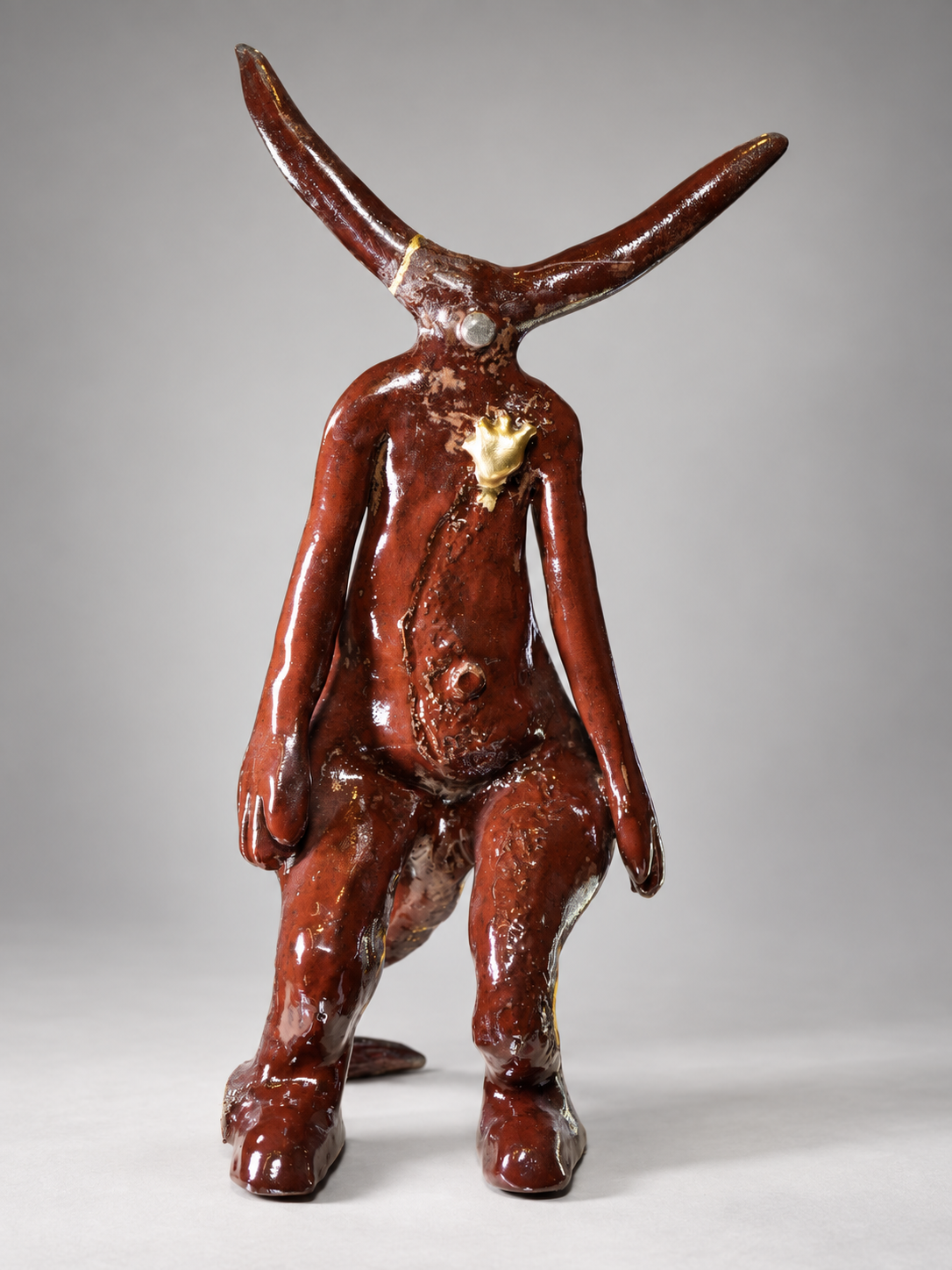 Image 6 of 7
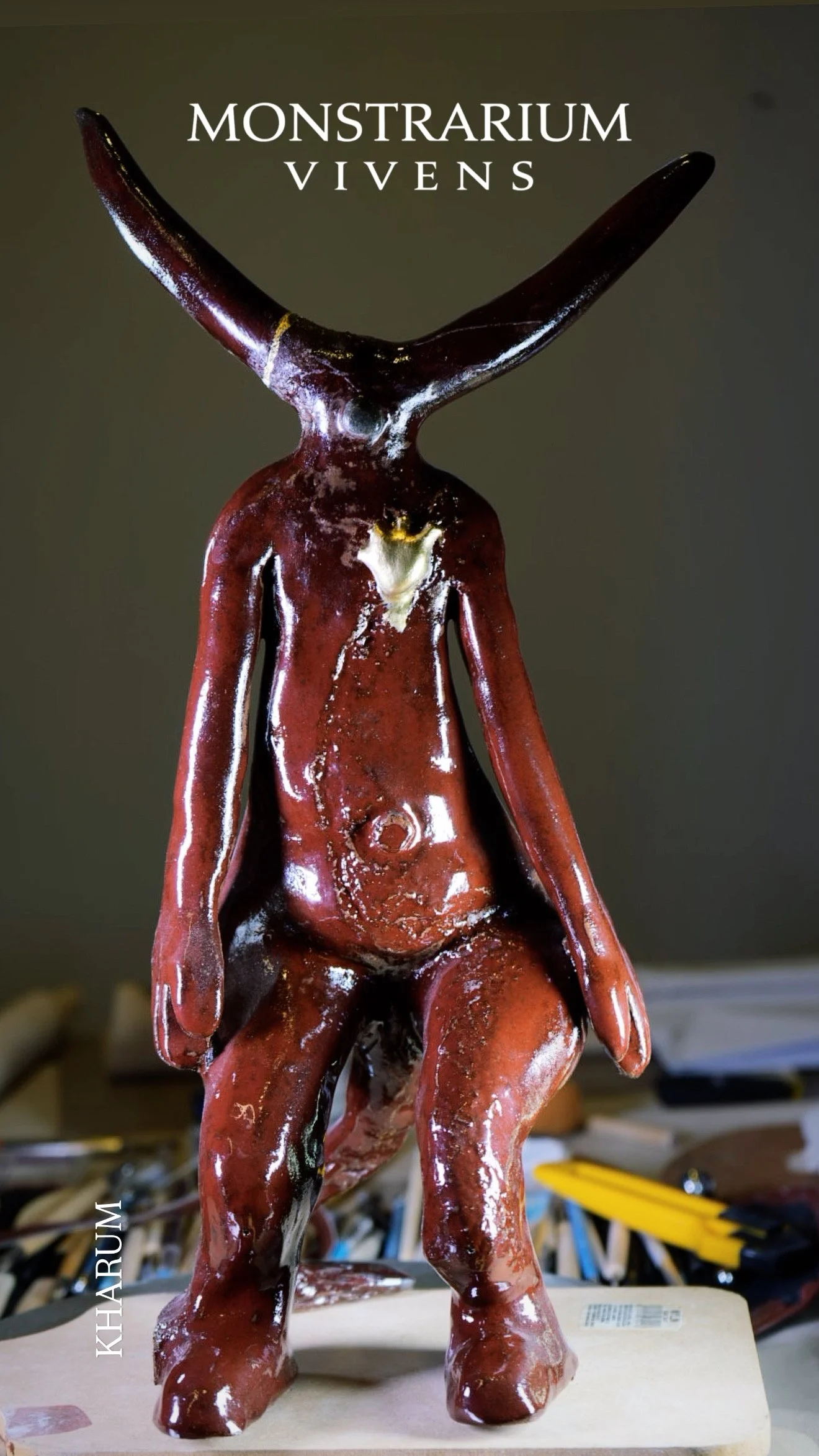 Image 7 of 7